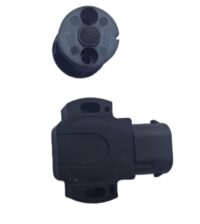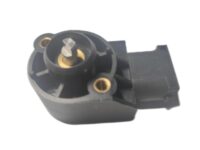
Position Sensor
Working Principle of Hall Effect Angle Sensors
The Hall effect is a physical phenomenon in which a transverse potential difference (Hall voltage) is generated in a current-carrying conductor placed within a magnetic field.
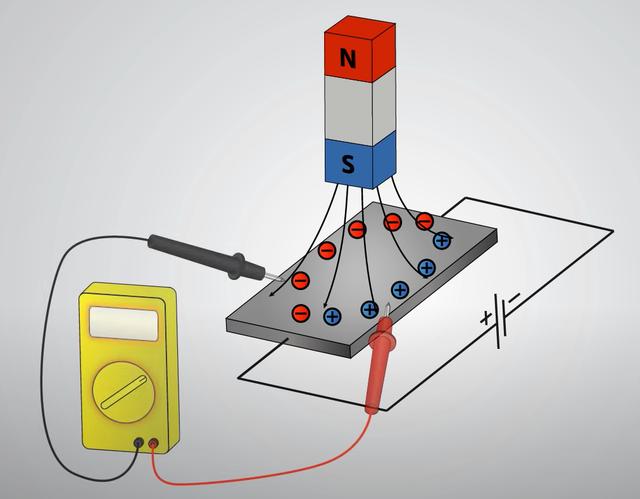
Hall effect angle sensors utilize this principle: a magnet, rigidly connected to a rotating shaft, creates a magnetic field. A Hall chip, fixed within the sensor housing, precisely measures changes in the magnetic field as the shaft rotates. These changes are converted into a precise electrical signal (analog or digital) proportional to the rotation angle.
Key advantages of this technology:
Non-contact measurement (high reliability)
High accuracy and repeatability
Long service life
Resistance to vibrations and contaminants
Typical Technical Parameters:
| Parameter | Value |
|---|---|
| Supply Voltage | 4.5-5V / 10-30V DC |
| Operating Temperature | -40 °C to +85 °C |
| Output Accuracy | 0.1° |
| Protection Rating (IP) | IP67 |
| Output Signal | Choice of: Current, Voltage, CAN |
| Housing Material | PA66GF30 |
| Angle Measurement Range | Up to 360° |
| Lever (Rod) | Optional installation |
Customized Solutions from OTV
In addition to the standard products presented in the table, OTV offers the development of fully customized solutions tailored to the customer’s specific tasks.
We can adapt:
Overall dimensions and mounting characteristics
Range of measurable angles
Type and parameters of the output signal
Shaft and lever design
Housing material and protection rating
Type of electrical connector
Operating temperature range
Our engineers are ready to develop the optimal solution for your application. Contact us to discuss your technical requirements.

Showing all 3 results