
Inductive Dual Rotary Encoders — INDS & INDO Series
Ultra-thin dual-encoder systems with one stator and dual code discs — delivering two independent position outputs in a compact, space-saving form factor for robot joints and multi-axis automation.
- Single-side & dual-side dual encoding (INDS / INDO)
- Ultra-thin profile: 3.6–4.0 mm · Hollow bore up to 85 mm
- High precision: ±0.010° accuracy · 17–21 bit resolution
- Two independent position outputs · 6000 rpm
What Is an Inductive Dual Rotary Encoder?
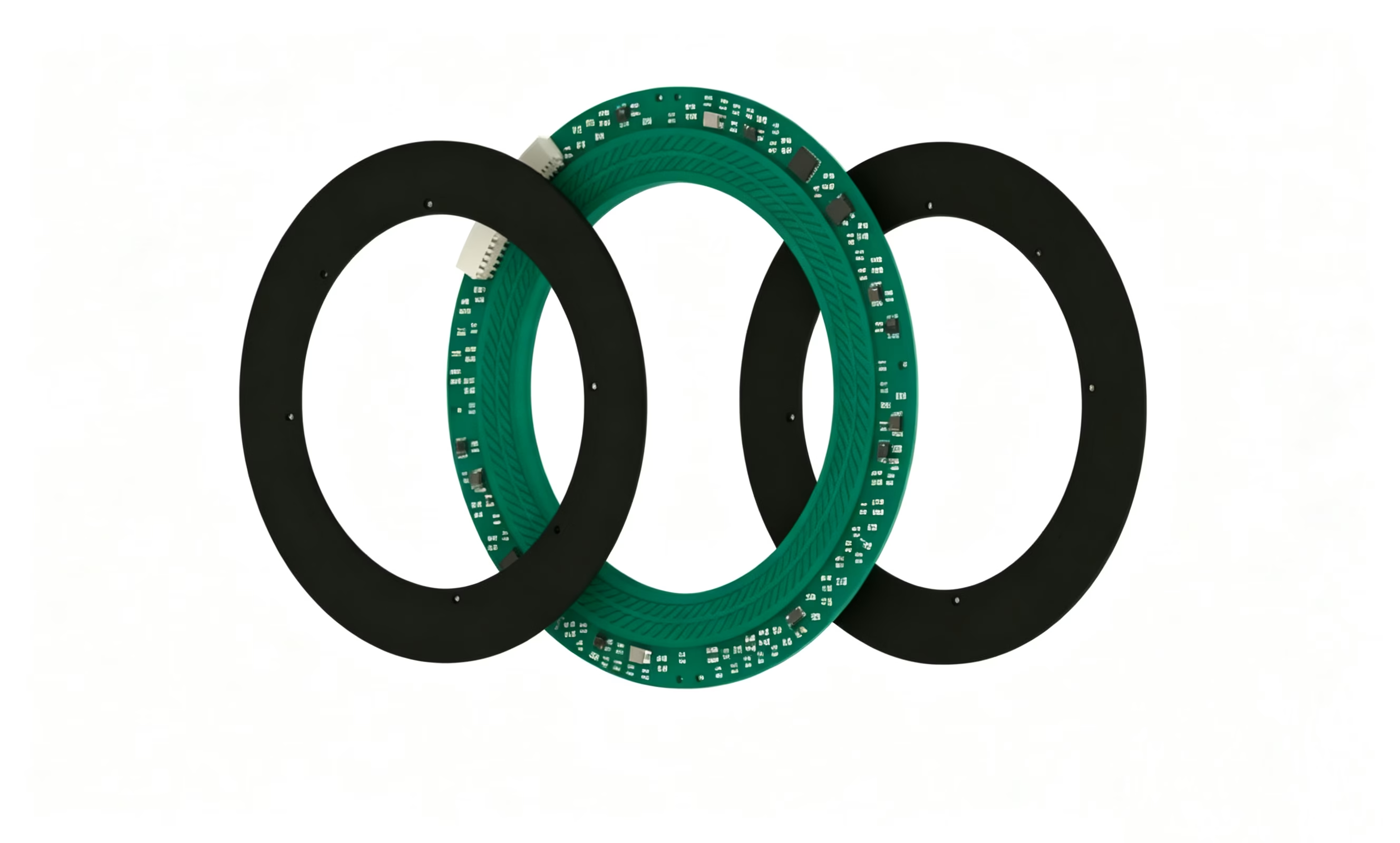
A dual rotary encoder integrates two independent position detection and signal output mechanisms into one compact unit — one stator paired with a rotor carrying inner and outer dual code discs.
One Stator, Dual Code Discs
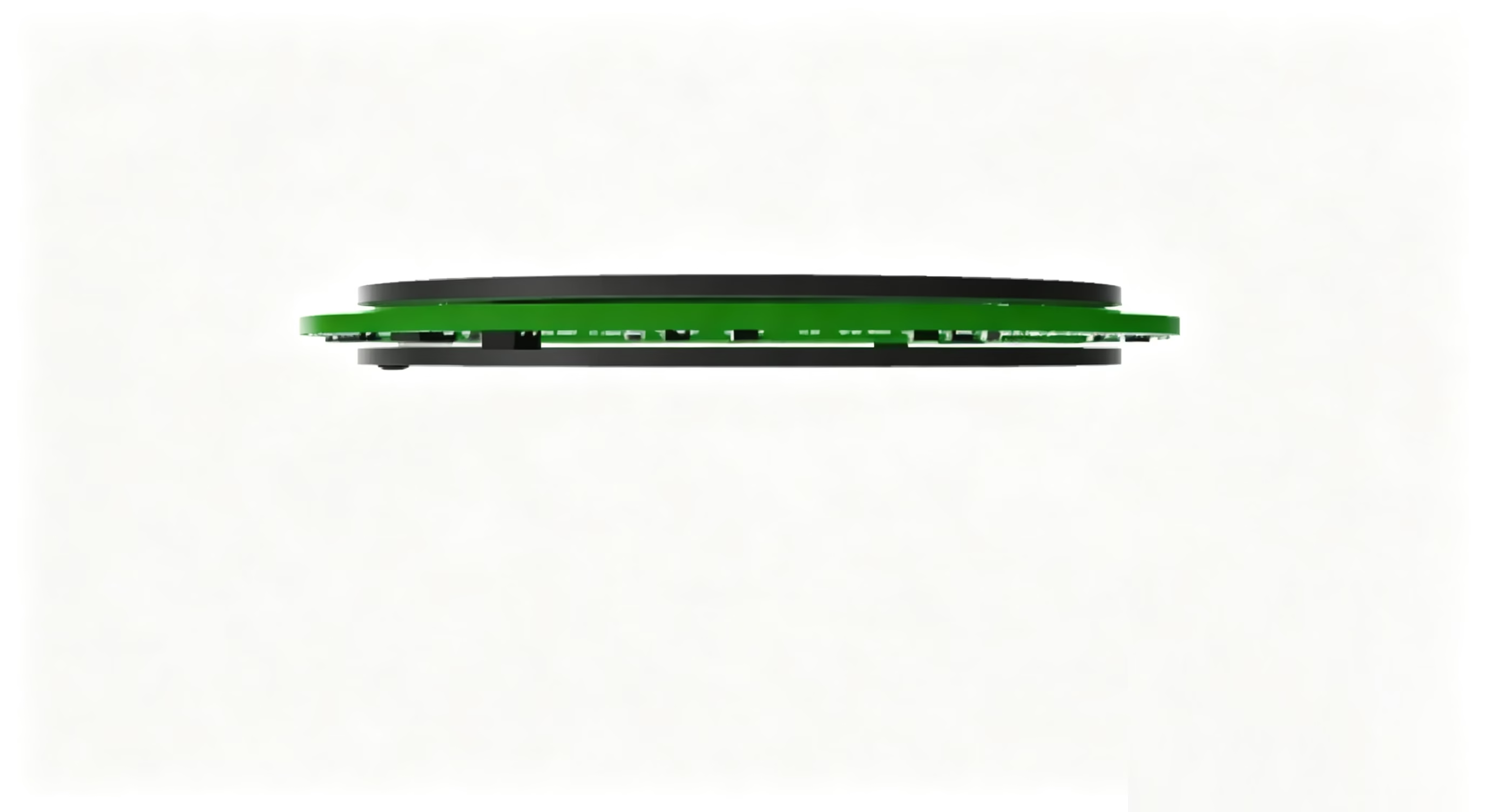
The rotor carries inner and outer dual code discs. Electromagnetic field stacking and identification technology reads both discs from a single side.
Two Independent Outputs
Two separate position signals from one unit — ideal for redundant, backup, or simultaneous high-speed / low-speed measurement.
Ultra-Thin & Ultra-Narrow
With a thickness as low as 3.6 mm and a large hollow bore, the INDS/INDO fits where conventional dual encoders cannot.
Two Configurations for Different Applications
OTV offers two inductive dual encoder series to meet different space and redundancy requirements.
Single-Side Dual Encoding
The INDS series is an ultra-thin dual-encoder consisting of one stator and a rotor with inner and outer dual code discs. It adopts electromagnetic field stacking and identification technology to achieve a single-side dual-encoding design in an ultra-thin and ultra-narrow form factor — high precision, low power consumption, and a very compact structure.
Dual-Sided Dual Encoding
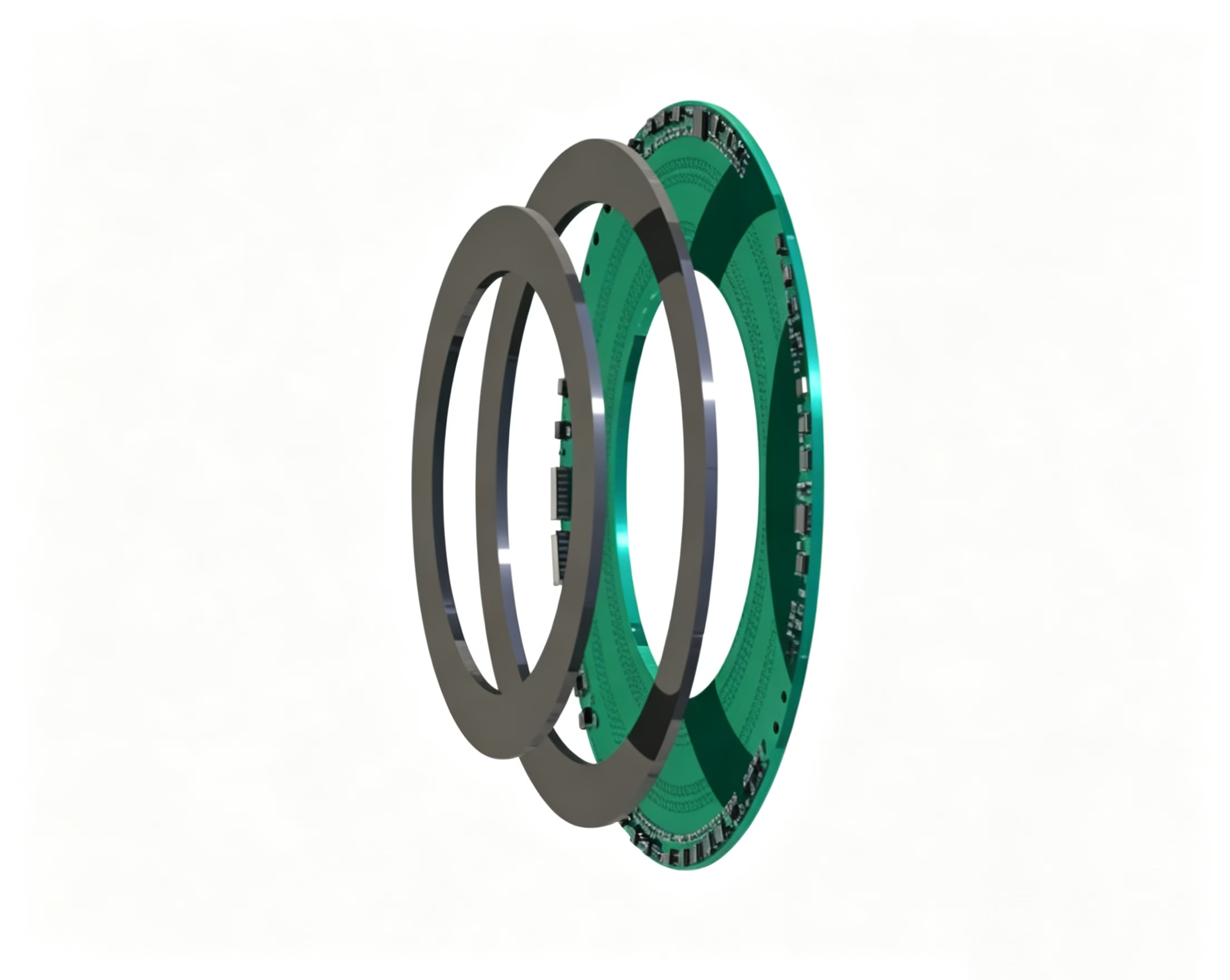
The INDO series is a dual-sided dual encoder consisting of one stator and two rotors positioned on opposite sides of the stator. It features high precision and a large hollow bore. Both the stator and rotors can be screw-fastened for quick installation, and it supports simultaneous high-speed and low-speed measurement — ideal for backup and redundancy applications.
Key Features
Dual-Encoding Design
Single-side (INDS) and dual-sided (INDO) dual encoding with inner and outer code discs.
Ultra-Thin & Compact
Thickness from 3.6 mm with a hollow bore — engineered for space-constrained robot joints.
High Precision
Accuracy down to ±0.010° with 17–21 bit resolution for precise motion control.
Low Power Consumption
Operating current from <80 mA (INDS) — efficient for battery-conscious and mobile systems.
Two Independent Outputs
Redundant, backup, or simultaneous high-speed / low-speed measurement from a single unit.
Customizable
Customized extended configurations available on request to meet specific requirements.
INDS & INDO Specifications
INDS Series — Same-Side / Dual-shaft
One stator + one rotor with inner and outer dual code discs (single-side dual encoding).
| Model | OD / ID / Thickness (mm) | Weight | Resolution | Accuracy | Max. Speed | Moment of Inertia (Inner / Outer) (kg·mm²) |
|---|---|---|---|---|---|---|
| INDS10 | 38 / 10 / 3.8 | 10 g | 17–19 bit | ±0.015° | 6000 rpm | 0.05 / 0.16 |
| INDS16 | 46 / 16 / 3.6 | 12 g | 17–19 bit | ±0.015° | 6000 rpm | 0.17 / 0.40 |
| INDS20 | 55 / 20 / 3.6 | 16 g | 17–19 bit | ±0.015° | 6000 rpm | 0.36 / 1.00 |
| INDS30 | 65 / 30 / 3.6 | 20 g | 18–20 bit | ±0.010° | 6000 rpm | 0.88 / 2.06 |
| INDS35 | 75 / 35 / 3.6 | 25 g | 18–20 bit | ±0.010° | 6000 rpm | 1.84 / 3.95 |
| INDS45 | 85 / 45 / 3.6 | 30 g | 18–20 bit | ±0.010° | 6000 rpm | 3.40 / 6.33 |
| INDS55 | 100 / 55 / 4.0 | 45 g | 19–21 bit | ±0.010° | 6000 rpm | 6.54 / 13.50 |
| INDS85 | 130 / 85 / 4.0 | 60 g | 19–21 bit | ±0.010° | 6000 rpm | 20.62 / 34.34 |
INDO Series — Opposite-Side / Dual-shaft
One stator + two rotors on opposite sides (dual-sided dual encoding, large hollow bore).
| Model | OD / ID / Thickness (mm) | Weight | Resolution | Accuracy | Max. Speed | Moment of Inertia (kg·mm²) |
|---|---|---|---|---|---|---|
| INDO10 | 34 / 10 / 7.6 | 10 g | 17–19 bit | ±0.015° | 6000 rpm | 0.11 |
| INDO20 | 50 / 20 / 7.6 | 20 g | 17–19 bit | ±0.015° | 6000 rpm | 0.70 |
| INDO18-21 | 58 / 18–21 / 7.6 | 30 g | 18–20 bit | ±0.010° | 6000 rpm | 1.66 / 1.58 |
| INDO36 | 70 / 36 / 7.6 | 35 g | 18–20 bit | ±0.010° | 6000 rpm | 3.40 |
| INDO31-35 | 78 / 31–35 / 7.6 | 40 g | 18–20 bit | ±0.010° | 6000 rpm | 4.50 / 4.30 |
| INDO56 | 90 / 56 / 7.6 | 50 g | 19–21 bit | ±0.010° | 6000 rpm | 9.80 |
| INDO76 | 110 / 76 / 7.6 | 65 g | 19–21 bit | ±0.010° | 6000 rpm | 21.20 |
Electrical & Environmental
| Series | Supply Voltage | Current | Output Protocols | Operating Temperature | Protection Grade |
|---|---|---|---|---|---|
| INDS | 5 V | <80 mA | SSI, BiSS-C, RS-422 serial, RS-485 | -30°C to +100°C | IP40 |
| INDO | 5 V | <240 mA | SSI, BiSS-C, RS-422 serial, RS-485, ABZ | -30°C to +105°C | IP40 |
Industry Applications
🤖 Humanoid Robots
Ultra-thin, hollow-shaft dual encoding for compact robot joints.
📦 Logistics Automation
Reliable position feedback for AGVs, conveyors, and automated systems.
⚡ New Energy Equipment
Precision sensing for renewable energy and electric drive systems.
🏥 Medical Devices
High-precision, low-power encoding for medical robotics and equipment.
Common Questions
What is the difference between the INDS and INDO series?
The INDS series uses a single-side dual-encoding design (one stator + one rotor with inner/outer dual code discs) for an ultra-thin profile. The INDO series uses a dual-sided design (one stator + two rotors on opposite sides) for a larger hollow bore and higher redundancy.
Why use a dual rotary encoder?
A dual encoder provides two independent position outputs in one unit — enabling backup and redundant measurement, or simultaneous high-speed and low-speed position feedback, which improves overall system reliability.
What output protocols are supported?
Both series support SSI, BiSS-C, RS-422 serial, and RS-485. The INDO series additionally supports ABZ output.
Can the encoder be customized?
Yes — customized extended configurations are available on request to meet specific mechanical, electrical, and environmental requirements.
What is the operating temperature range?
The INDS series operates from -30°C to +100°C, and the INDO series from -30°C to +105°C. Both are rated IP40.
Need a Dual Rotary Encoder for Your Application?
Tell us your bore size, resolution, and redundancy requirements. We’ll recommend the optimal INDS or INDO model — or customize one to fit your exact mechanical envelope.
Request a Quote