
Magnetic Absolute Linear Encoder:High-Precision Non-Contact Linear Position Feedback
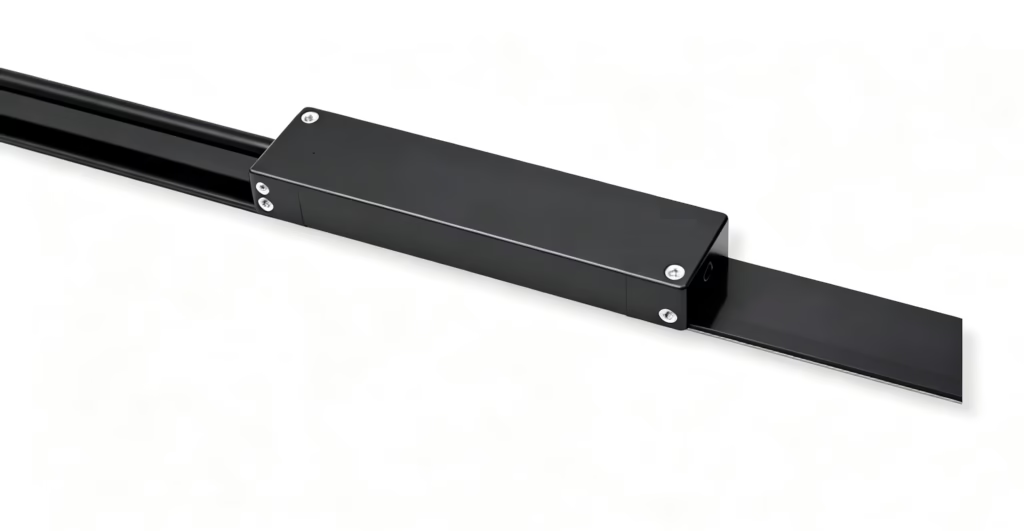
In the age of Industry 4.0 and advanced robotics, precise linear motion control is the foundation of system performance. Magnetic absolute linear encoders have emerged as a robust alternative to optical encoders—particularly in harsh industrial environments where dust, oil, moisture, and vibration are unavoidable.
At OTV Sensing, we specialize in high-performance magnetic feedback systems for demanding applications. Our products are widely used in CNC machine tools, semiconductor manufacturing, medical equipment, and robotic joint control.
1.Absolute linear encoder working principle
1.1 Magnetic Sensing Technologies: Hall, AMR, and TMR
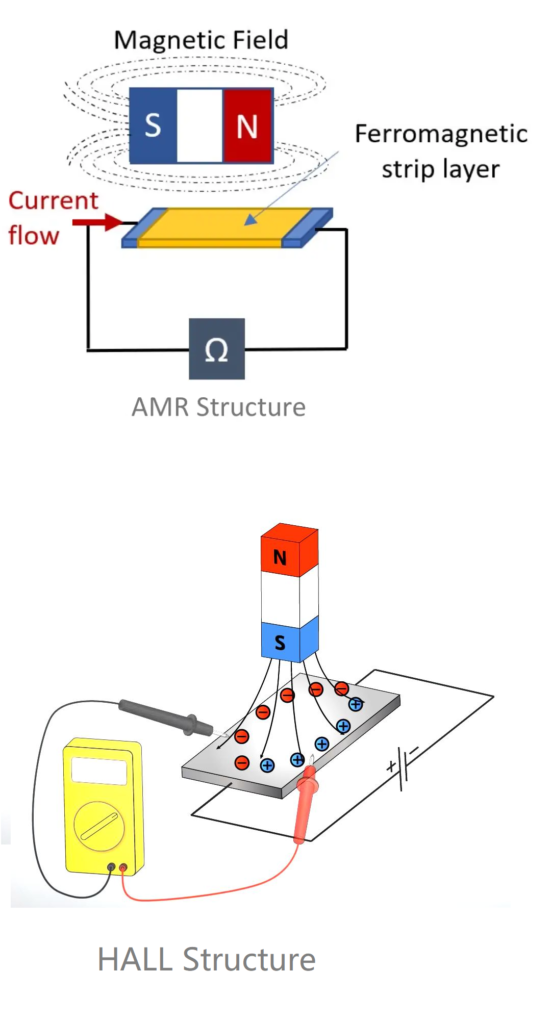
AMR (Anisotropic Magneto-Resistive): The sensor operates in saturation mode, typically requiring a magnetic field >300 Gauss. It responds only to the direction of the magnetic field—not its amplitude. This makes the system highly tolerant to variations in air gap and mechanical tolerances during installation.
TMR (Tunnel Magneto-Resistive): A newer technology that delivers higher signal output and lower power consumption (up to 50% reduction compared to Hall sensors). It also offers excellent temperature stability, making it ideal for applications where thermal drift must be minimized.
Hall Effect: A well-established, cost-effective technology suitable for general industrial applications where high integration and simplicity are priorities.
1.2 The Vernier (Nonius) Principle for Absolute Positioning
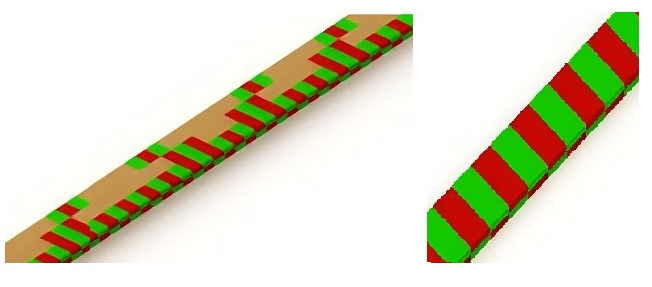
Incremental encoders require a reference run after power-up to determine position. Our absolute linear encoders, by contrast, provide a unique position value immediately upon startup. This is achieved using a dual-track magnetic scale:
Master Track: Alternating N/S poles with a fixed pole pitch (e.g., 1.5 mm or 2.0 mm). This track provides high-resolution incremental position data.
Nonius Track: A second track with a slightly different number of pole pairs—typically one less across the total measuring length.
The encoder IC (such as the iC-MU series) simultaneously reads both tracks. By calculating the phase difference between the two signals, the system determines the absolute position instantly with no processing delay.
1.3 System Components
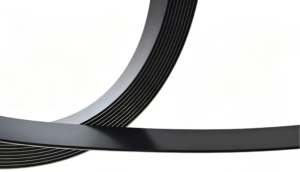
A complete magnetic absolute linear encoder system consists of two primary components:
| Component | Description |
|---|---|
| Magnetic Scale | A stainless steel carrier strip coated with bonded ferrite rubber, magnetized with precision pole patterns. For absolute encoding, we use dual tracks—one incremental and one absolute (Nonius). |
| Readhead | Contains the magnetic sensor IC and signal processing electronics. As the readhead moves along the scale, the IC detects field variations and calculates absolute position in real time. |
2. OTV Sensing Absolute Linear Encoder Series
2.1 Standard Product Specifications
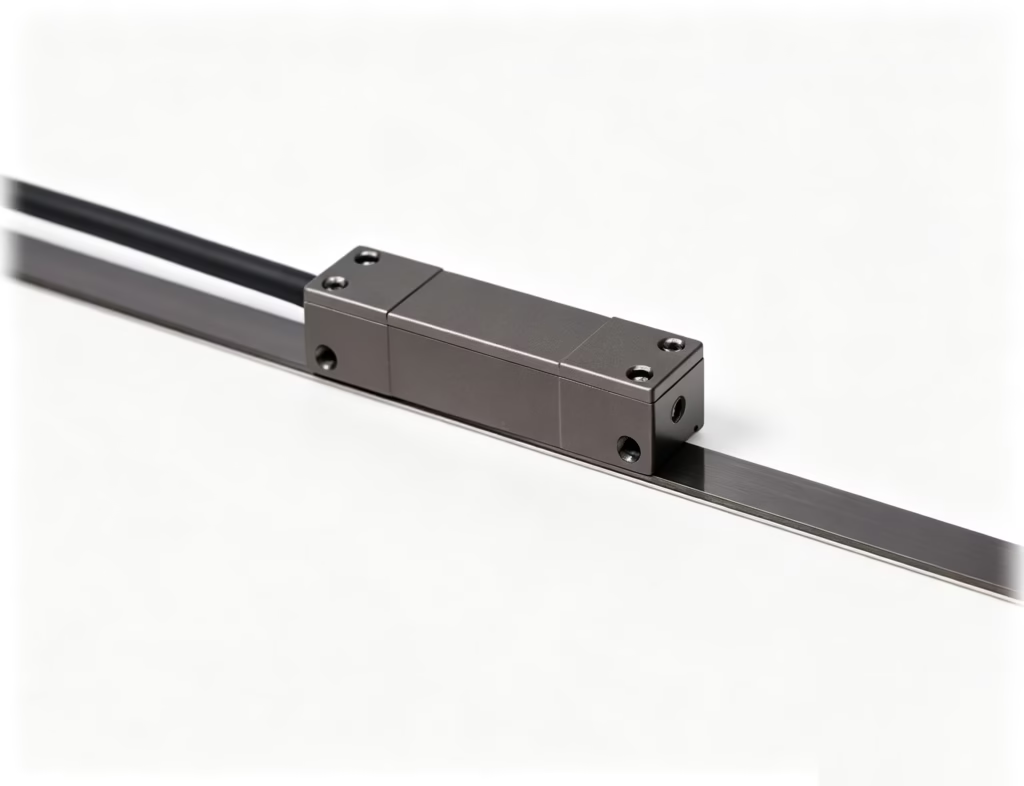
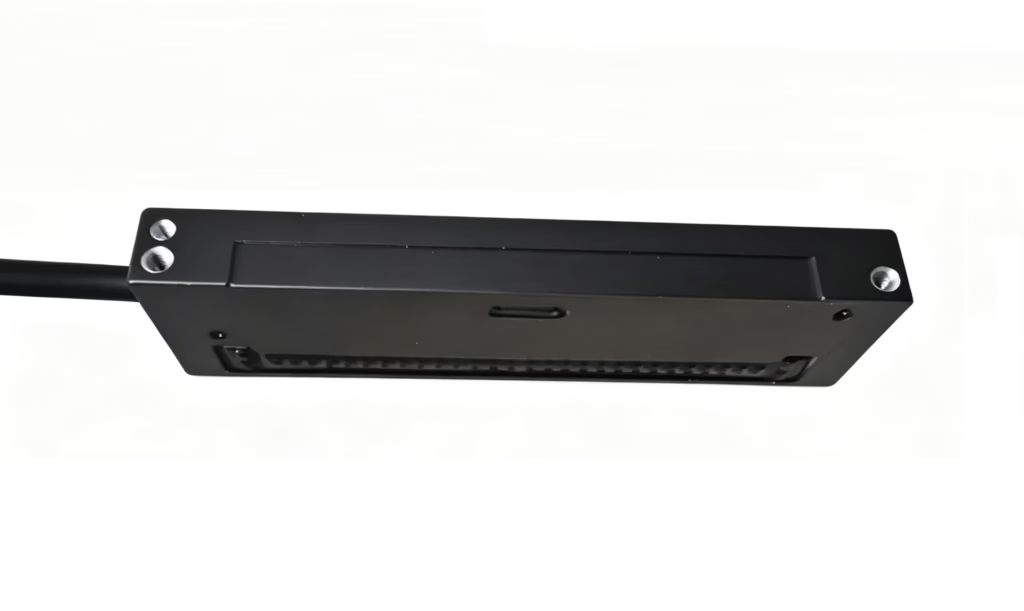
OTV absolute encoders deliver immediate, wear-free position feedback upon power-up—eliminating the need for homing sequences, reference marks, or battery backups. Both systems are fully sealed to IP67 protection standards, ensuring stable and reliable performance in demanding factory environments exposed to dust, oil, coolant, and humidity.
Technical Specification | ||
|---|---|---|
Product Type | True Absolute Magnetic Grid Encoder System | True Absolute Linear Magnetic Encoder System |
Encoding Architecture | Dual-Track Absolute (2 mm pole pitch incremental + binary-coded absolute) | Dual-Track Absolute (5 mm pole pitch incremental + 14-bit PRBS absolute) |
Readout Sensor Type | Magnetic grid sensing array | AMR sensor array (incremental) + Hall sensor array (absolute) |
Resolution | Down to 0.1 µm | 1 µm |
Max. Measurement Length | 16.3 m (16,384 mm cycle length) | 82 m (82,000 mm continuous length) |
System Accuracy | ±20 µm/m to ±40 µm/m | ≤ 50 µm (module and mounting dependent) |
Repeatability | < 2 µm (< 1 µm unidirectional) | ≤ ±2.5 µm (unidirectional @ 1 µm res, 1.2 mm gap) |
Max. Linear Velocity | 5 m/s | 5 m/s |
Position Latency / Update Time | < 62.5 µs | < 6 µs |
Power-Up Startup Time | < 350 ms | < 400 ms |
Operating Gap (Air Gap) | 0.2 – 0.6 mm (0.3 mm recommended spacer) | 1.2 ± 0.3 mm (0.2 – 2.0 mm allowable range) |
Digital Interfaces / Protocols | BiSS-C, SSI, Tamagawa, Panasonic, RS-485 | BiSS-C, SSI, Tamagawa, Modbus-RTU, Panasonic |
Housing Material | Stainless Steel (Epoxy resin potted) | Anodized Aluminum |
Environmental Protection | IP67 | IP67 |
Operating Temperature | -10°C to +55°C | -20°C to +80°C |
Readhead Weight | 105 g (with 0.5 m cable & DB9 connector) | Approx. 30 g (without cable) |
Readhead Dimensions (L×W×H) | Compact body (46 mm screw spacing) | 93 × 23 × 11 mm (86 mm screw spacing) |
Cable Specifications | PUR high-flex, drag-chain compatible, OD 5.0 mm | TPU high-flex, dual-shielded, drag-chain rated (≥ 20M flex cycles), OD 4.4 mm |
- Choose the OTV AL200 if you require:
- Ultra-high resolution down to 0.1 µm for micro-positioning feedback.
- Higher linear accuracy grades (±20 µm/m).
- Choose the OTV AMG5000 if you require:
- Extra-long travel distances up to 82 meters.
- A wider installation air gap (1.2 mm nominal) allowing for greater mechanical installation tolerances.
2.2 Customizable Parameters
We understand that every application has unique constraints. OTV Sensing offers extensive customization options to ensure the encoder fits your system perfectly.
| Parameter | Customization Options |
|---|---|
| Measuring Length | From 100 mm up to 82 m |
| Pole Pitch | standard 2 mm, 1 mm, 1.5 mm, 5mm, or custom pitches to match specific encoder ICs |
| Magnetic Scale Width | Standard 8 mm or 10 mm; thickness can be reduced to 1 mm for ultra‑compact applications |
| Magnetic Material | High‑performance ferrite rubber; optional stainless steel carrier tape for added stability |
| Output Protocol | SSI, BiSS‑C, SPI, RS485, or other protocols on request |
| Cable Configuration | Custom length, shielding options, and exit orientation |
| Mounting Method | Adhesive backing, mechanical mounting holes, or protective cover tape |
2.3 Customization Process
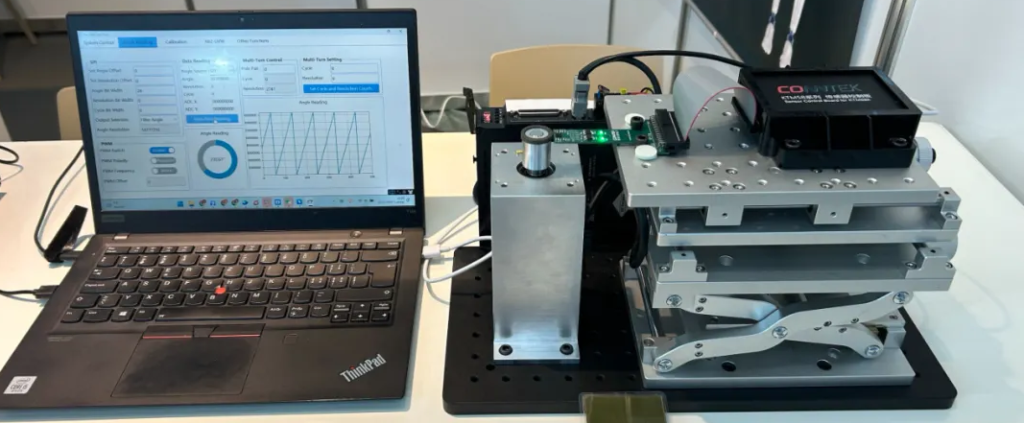
Requirement Analysis: We work closely with your engineering team to understand your specific needs—measuring length, resolution, accuracy, environmental conditions, and mechanical constraints.
Design & Engineering: Our engineers design the magnetic scale pattern and select appropriate materials to meet your specifications.
Prototyping: Prototype samples are manufactured for your testing and validation.
Production: Full‑scale manufacturing with 100% inspection to ensure quality consistency.
3. Typical Applications

Magnetic absolute linear encoders are used across a wide range of industries that demand high precision and reliability:
| Industry | Application Examples |
|---|---|
| Robotics | Collaborative robots, linear actuators, positioning stages |
| Industrial Automation | Pick‑and‑place machines, automated assembly lines |
| Machine Tools | CNC machining centers, grinding machines |
| Medical Equipment | Surgical robots, imaging systems, patient positioning tables |
| Renewable Energy | Solar tracking systems, wind turbine pitch control |
| Linear Motors | High‑speed linear motion stages, direct‑drive systems |
| Packaging Machinery | Filling machines, labeling equipment |
| Automotive Manufacturing | EV battery assembly, test stands |
4. Full Solutions from OTV Sensing
At OTV Sensing, we offer complete, standalone magnetic absolute linear encoder solutions, including both the readhead and the precision magnetic scale.
In addition, we also supply custom magnetic scales separately—ideal for system integrators who have already selected an encoder IC or readhead and need a tailored magnetic target. Whether you need a specific pole pitch, a reduced thickness for tight spaces, or a unique length, our team can deliver a magnetic scale that integrates seamlessly with your existing electronics.
Thanks to contact OTV Sensing to discuss your requirements and find the optimal magnetic absolute linear encoder for your motion control system.
FAQ
1.What is the advantage of a magnetic absolute linear encoder over an optical encoder?
Magnetic encoders are inherently more robust in harsh environments. They are not affected by dust, oil, moisture, or condensation. They also tolerate larger installation tolerances and are less sensitive to vibration, making them ideal for industrial automation, robotics, and outdoor applications.
2.Does the encoder require a homing sequence after power-up?
No. Our absolute linear encoders use a dual‑track (Nonius) magnetic scale and an absolute output protocol such as BiSS‑C. They provide a unique position value immediately upon startup—no reference run is needed.
3.What is the standard MOQ for your linear magnetic encoder?
We are flexible to discuss volume-based adjustments for prototype or trial orders.
4.Can you produce custom desgin samples before full production? Is there a charge?
Yes, we can provide custom designsamples for validation. Samples are typically charged at a nominal fee to cover material and setup costs. Lead time for sample building is generally 4 weeks after design confirmation.
5.Can I use my own readhead with a custom magnetic scale from OTV?
Yes. In addition to complete encoder systems, we offer standalone custom magnetic scales. We can tailor the pole pitch, scale width, thickness, measuring length, and track configuration to match your chosen readhead or encoder IC.
6.What output protocols do you support?
We support absolute protocols including BiSS‑C, SSI, SPI, and RS485. If you have a specific protocol requirement, please contact us—we can evaluate compatibility.
7.What is the maximum measuring length?
Standard lengths go up to 5 meters. For longer travel distances, custom scales can be manufactured—please contact us with your specific requirements.