
Magnetic Rotary Encoder ICs Guide: From AMR Technology to Complete Position Sensing Solutions
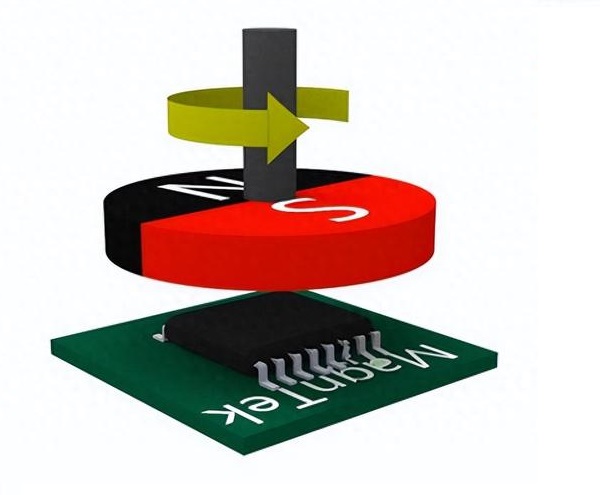
In the automation and motion control systems, accurate position feedback is the cornerstone of system performance. Whether it’s precise control of robot joints or high-speed response of servo motors, high-performance encoder ICs are essential.
Novosense, as a leading magnetic sensor IC supplier, offers a comprehensive Angle Encoder series based on advanced AMR technology, providing everything from Magnetic rotary encoder to absolute magnetic encoder solutions for the market.
AMR vs. Hall – Two Mainstream Technologies for Magnetic Encoders
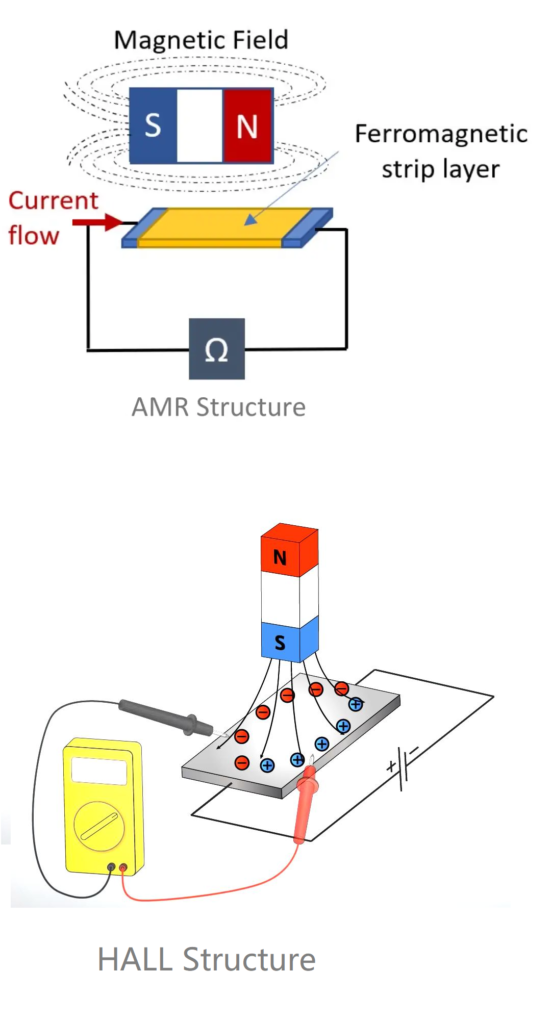
Novosense’s Angle Encoder ICs are primarily based on advanced AMR (Anisotropic Magnetoresistance) technology, capable of sensing absolute angular positions from 0 to 360°. Both AMR and Hall technologies are widely used in magnetic encoders, representing the two mainstream sensing approaches.
So what exactly are the differences between these technologies, and why did Novosense choose AMR as its core technology path? Here’s a detailed technical comparison:
| Comparison Dimension | AMR (Anisotropic Magnetoresistance) | Hall Effect |
|---|---|---|
| Operating Principle | Utilizes the characteristic of material resistance changing with magnetic field direction. Sensitive to magnetic fields parallel to the chip surface. | Utilizes the Hall voltage generated in a current-carrying conductor within a magnetic field. Sensitive to magnetic fields perpendicular to the chip surface. |
| Key Advantages | High Sensitivity & Accuracy: Significantly higher sensitivity than Hall sensors, capable of detecting weaker field changes, making high accuracy easier to achieve. | Cost-Effective: Mature technology with a well-established supply chain; generally lower cost while meeting basic application requirements. |
| Wide Installation Tolerance: Greater tolerance for air gap variations and eccentricity, reducing mechanical assembly difficulty and cost. | High Stability: Excellent linearity and stability, providing reliable performance in conventional applications. | |
| High-Speed Capability: Handles extremely high rotational speeds, maintaining accuracy e.g., at 120,000 RPM. | Flexible Power Consumption: Can achieve very low power consumption with proper design, suitable for battery-powered applications. | |
| Compact Size: High sensitivity enables smaller, thinner designs ideal for space-constrained applications like robot hands. | Interference Immunity: Sensitive to perpendicular fields, offering good interference rejection in specific orientations. |
AMR Advantage: AMR sensors are sensitive only to magnetic field direction, not field strength. This means they operate in saturation mode, making them insensitive to magnet manufacturing tolerances and variations in installation distance, significantly enhancing system robustness.
AMR Angle Encoder IC Series Overview
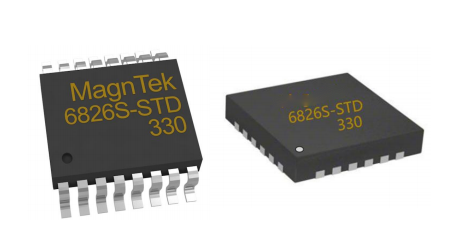
With the technical principles understood, let’s examine the performance parameters and application positioning of each Novosense model.
Magnetic Encoder IC List
| Part Number | Absolute Resolution | Linearity (INL) | Max Speed (RPM) | System Latency | Output Interfaces | Automotive Grade |
|---|---|---|---|---|---|---|
| MT6835 | 21 bit | <±0.07° | < 120,000 | 2µs ~ 10µs | 4-wire SPI, ABZ, UVW, PWM | No |
| MT6826S | 15 bit | <±0.1° | < 120,000 | 2µs ~ 10µs | 4-wire SPI, ABZ, UVW, PWM | No |
| MT6825 | 18 bit | <±0.5° | < 25,000 | < 2µs | 3/4-wire SPI, ABZ, UVW, PWM | No |
| MT6816 | 14 bit | <±1.2° | < 25,000 | < 2µs | 3/4-wire SPI, ABZ, UVW, PWM | Yes (AEC-Q100) |
| MT6813 | 14 bit | <±0.75° | < 6,000 | 100µs ~ 400µs | I²C, 3/4-wire SPI, Analog, PWM | No |
| MT6501 | – | – | – | – | 3-wire SPI, Analog, PWM, SWO | Yes (AEC-Q100) |
In-Depth Series Analysis and Selection Guide
Series 1: High-Precision & Ultra-High-Speed – MT6835 & MT6826S
MT6835 is Novosense’s new flagship product, delivering industry-leading 21-bit core resolution and <±0.07° linearity. Its standout feature is support for ultra-high speeds up to 120,000 RPM, making it ideal for extreme performance applications like high-speed servo motors and spindle control. It also features an automatic Non-Linearity Calibration (NLC) mode, further reducing INL to ±0.02°.
MT6826S also supports 120,000 RPM but with 15-bit resolution and <±0.1° accuracy. It offers a convenient self-calibration mode to compensate for non-linearity caused by imperfect magnets or installation misalignment.
Typical Applications: High-speed servo motors, spindle encoders, high-end applications replacing optical encoders.
Series 2: High-Speed Response – MT6825 & MT6816
MT6825 provides 18-bit absolute angle output. Its core advantage is extremely low system latency (<2µs), perfectly suited for applications demanding real-time control, such as industrial robot arms and precision servo systems.
MT6816 offers 14-bit resolution with the same <2µs low latency and is AEC-Q100 automotive qualified, meeting the stringent reliability requirements of automotive electronics.
Typical Applications: Industrial robot joints, automotive electronic systems, real-time control servo drives.
Series 3: General Purpose & Interface Flexibility – MT6813 & MT6501
MT6813 offers an I²C interface alongside standard SPI, facilitating communication with various microcontrollers. It also features a 12-bit DAC output, providing greater design flexibility.
MT6501 is designed as a non-contact potentiometer or angular position switch. It supports programmable output curves and provides analog, PWM, and switch outputs (SWO). It is also automotive qualified.
Typical Applications: General industrial control, non-contact potentiometers, automotive position sensing.
Magnetic Target Requirements for Magnetic Encoders
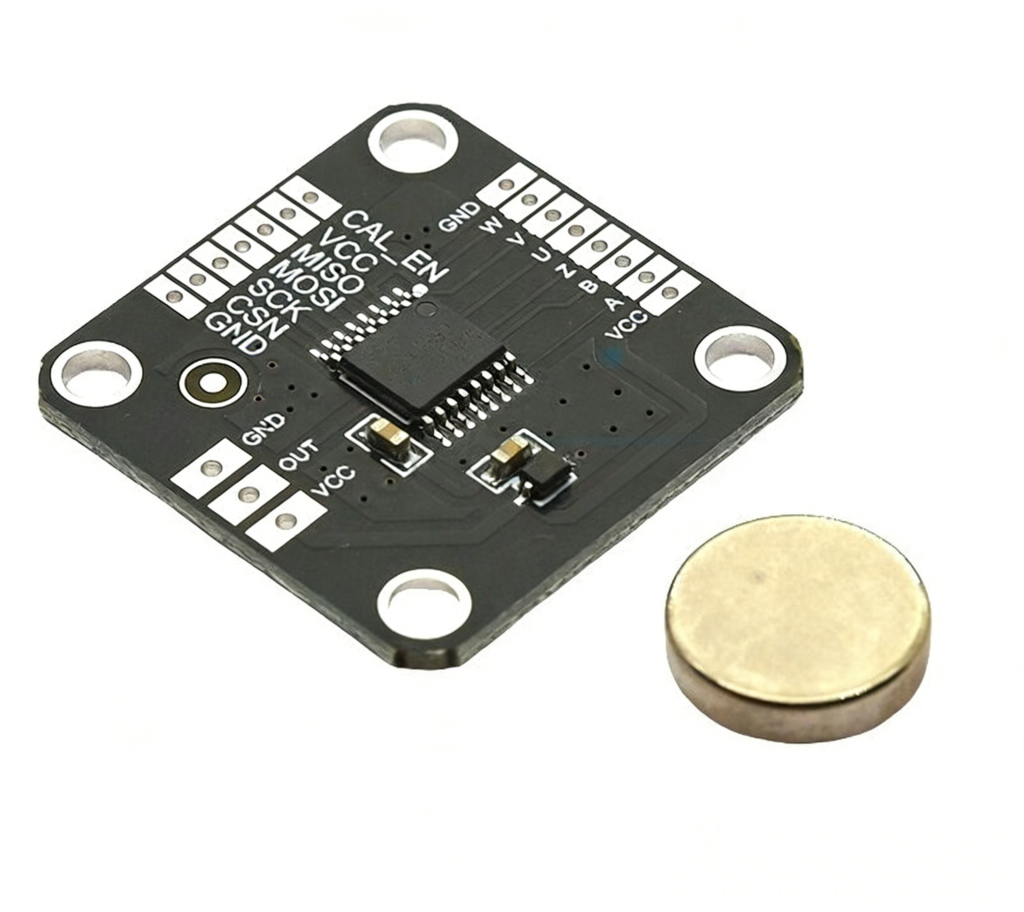
As part of an absolute magnetic encoder solution, the IC must work with a properly matched magnetic target to achieve optimal performance. Novosense’s MT series, based on AMR technology, operates in saturation mode (saturation field ~300 Gauss), resulting in low sensitivity to magnet tolerances and installation errors.
1. General Magnet Configuration Requirements
All MT series ICs for 0~360° angle measurement require a 1-pole-pair (N/S) radially magnetized cylindrical magnet:
| Part Number | Recommended Dia. | Recommended Thickness | Input Field Range | Typical Eccentricity |
|---|---|---|---|---|
| MT6835 | 10 mm | 2.5 mm | 30 mT to 1,000 mT | Max 0.3 mm |
| MT6826S | 10 mm | 2.5 mm | 30 mT to 1,000 mT | Max 0.3 mm |
| MT6825 | 10 mm | 2.5 mm | 30 mT to 1,000 mT | Max 0.3 mm |
| MT6816 | 10 mm | 2.5 mm | 30 mT to 1,000 mT | Max 0.3 mm |
| MT6813 | 8 mm | 2.5 mm | 200 Gauss to 10,000 Gauss | Max 0.3 mm |
| MT6501 | ≥ 8.0 mm | ≥ 2.5 mm | 300 Gauss to 10,000 Gauss | – |
2. Installation and Material Recommendations
Air Gap: Most MT series ICs support a maximum air gap (magnet to chip surface) of 3.0 mm.
Magnet Material: NdFeB or SmCo magnets are recommended, with typical temperature coefficients of -0.12%/°C and -0.035%/°C respectively.
Center Alignment: The magnet’s central axis must be aligned with the IC’s magnetic sensing center (typically the package geometric center) for optimal linearity.
OTV Complete Absolute Magnetic Encoder Solution
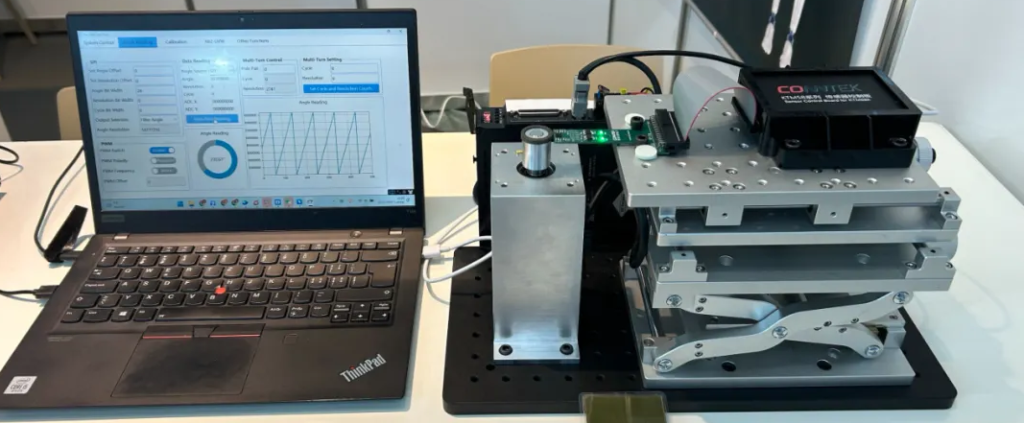
After understanding the excellent performance of Novosense ICs, a critical question arises: How do you quickly and reliably integrate these chips into your product?
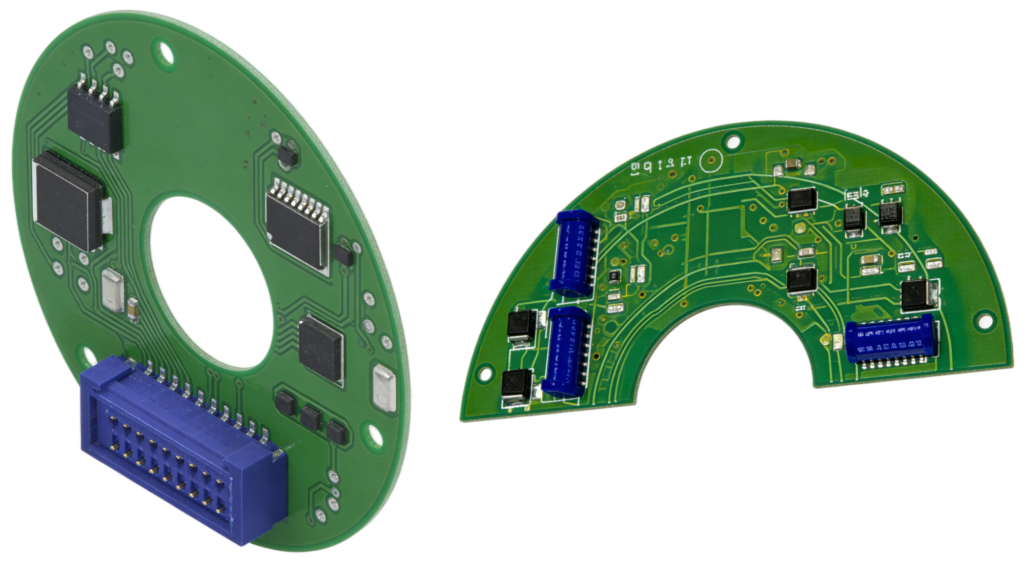
OTV Sensing provides a complete absolute magnetic encoder solution, comprising three core components:
✅ High-Performance Encoder ICs: The full Novosense MT series, from the high-precision MT6835 to the automotive-grade MT6816, meeting diverse application requirements.
✅ Custom PCBA Design: Optimized PCBA layout based on your system architecture, ensuring signal integrity and noise immunity.
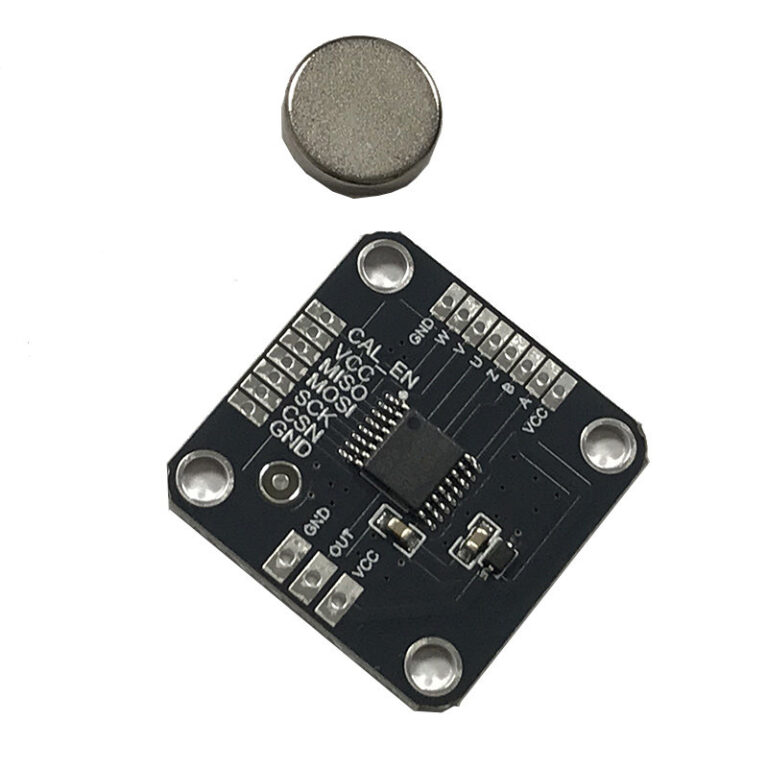
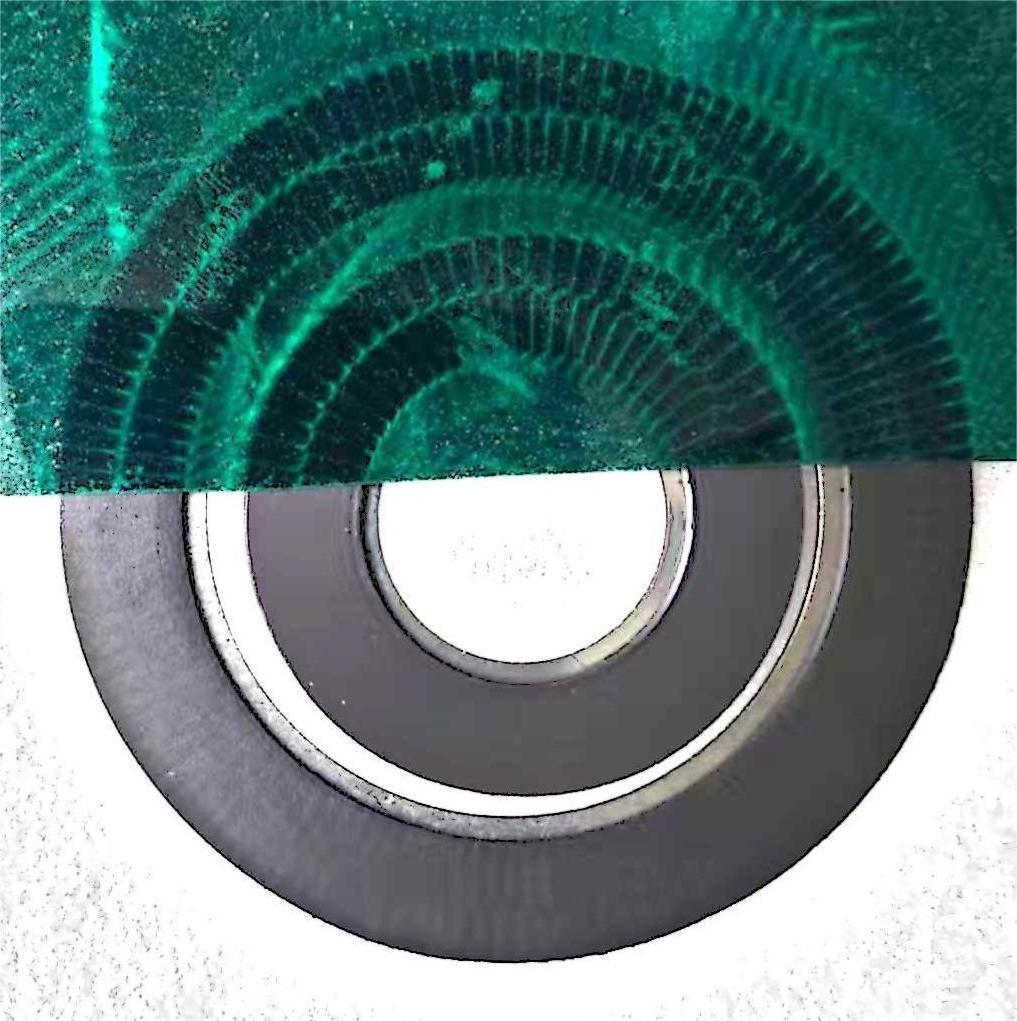
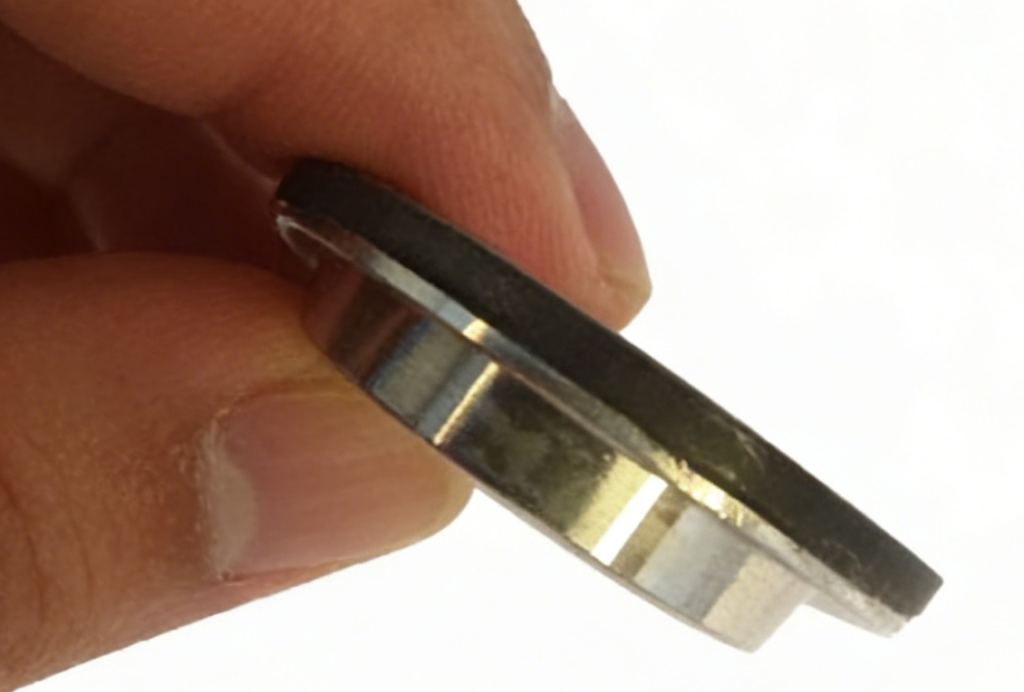
✅ Precision Magnetic Targets: Leveraging our deep understanding of Novosense chip requirements, we provide rigorously tested matching magnets to guarantee optimal performance matching.We can also provide standard and custom precision magnetic rings and linear magnetic scales.
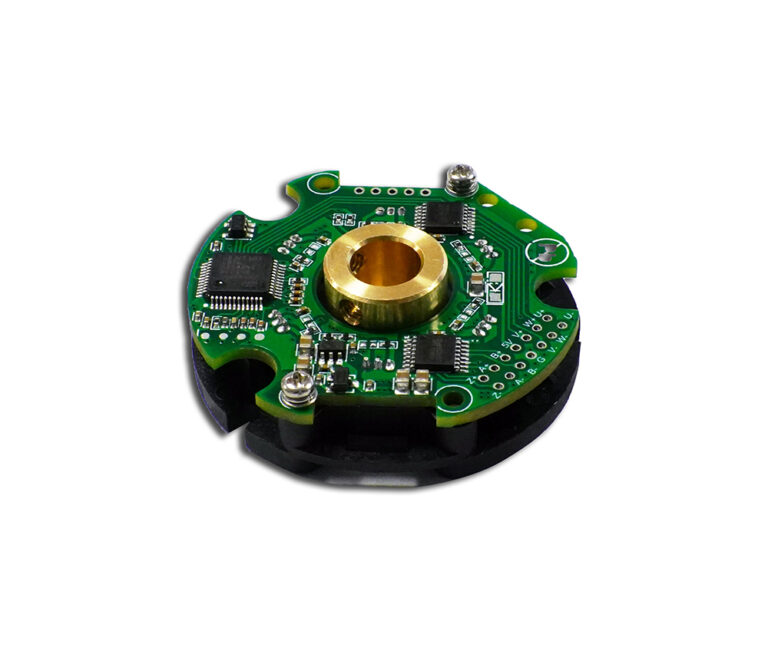
Whether you need a Magnetic rotary encoder for a servo motor or a linear magnetic encoder for linear displacement measurement, OTV offers a one-stop solution from IC to magnetic target.
Our engineering team is ready to provide selection support, design optimization, and sample testing to accelerate your time-to-market.
FAQ
1.What is the difference between AMR and Hall technology in magnetic encoders?
AMR (Anisotropic Magnetoresistance) technology is sensitive to the direction of the magnetic field parallel to the chip surface, offering higher accuracy, better tolerance to air gap variations, and support for much higher speeds (up to 120,000 RPM). Hall technology senses fields perpendicular to the chip, is more cost-effective for basic applications, and can achieve very low power consumption.
2.What resolution and accuracy can I expect from Novosense magnetic encoder ICs?
Novosense offers a range of resolutions from 14-bit to 21-bit absolute. The flagship MT6835 achieves an industry-leading 21-bit resolution with excellent linearity of <±0.07°. For high-speed applications, the MT6826S provides 15-bit resolution, while the MT6816 offers 14-bit resolution with AEC-Q100 automotive qualification.
3.What type of magnet is required for these encoder ICs?
All MT series ICs for rotary sensing require a 1-pole-pair (diametrically) radially magnetized cylindrical magnet. The recommended size is typically Ø8-10mm with a 2.5mm thickness. The magnet must be centered over the chip’s sensing area. OTV provides pre-matched magnetic targets validated for optimal performance.
4.Can you produce custom desgin samples before full production? Is there a charge?
Yes, we can provide custom designsamples for validation. Samples are typically charged at a nominal fee to cover material and setup costs. Lead time for sample building is generally 4 weeks after design confirmation.
5.What is the typical lead time for standard magnetic encoder orders?
For standard products with no stock, the lead time is 2 weeks after order confirmation and receipt of deposit.
6.Can I request custom magnetic ring specifications?
Yes,we fully support customization for parameters such as inner/outer diameter, mounting hole positions, thickness, and magnetic properties to meet specific application needs.