
Magnetic Ring With Reference Mark

In every corner of modern industry—from the robotic arm joints in smart factories to motor control in new energy vehicles, from the workstations of precision instruments to the pitch systems of wind turbines—magnetic encoders and their various sensing chips (Hall, magnetoresistive, giant magnetoresistive) are integral, performing the critical task of precisely detecting the speed and position of key components.
These technologies form the sensory nerve endings of industrial automation, and their “subject of perception” is often a meticulously designed magnetic ring(magnetic target).
1. Three Core Magnetic Sensing Technologies
1.1 Hall Effect Sensors: The Foundation of Industrial Applications
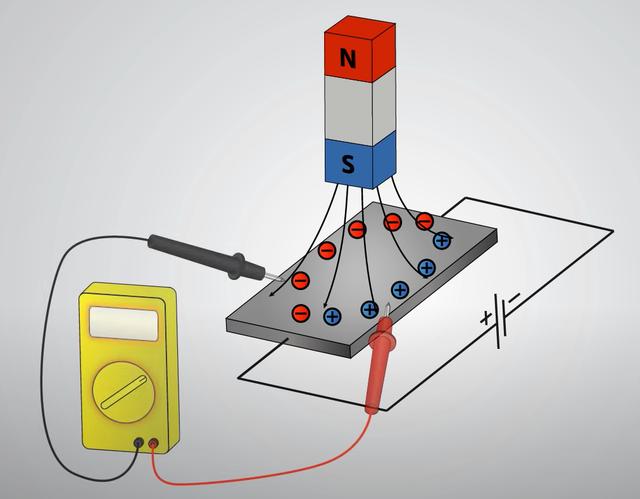
Technical Principle: When an electric current passes through a conductor perpendicular to a magnetic field, a voltage difference is generated across the conductor—this is the Hall effect. Hall sensors amplify and process this voltage signal, outputting either a digital switch signal or an analog value.
Your Industrial Application Scenarios:
Motor Commutation Control: In your Brushless DC (BLDC) Motors, three Hall sensors are installed 120 degrees apart. By detecting the rotor’s magnetic pole position, they provide precise timing for electronic commutation.
Flow Measurement: In your liquid or gas pipelines, an impeller embedded with a magnet rotates. A Hall sensor calculates flow by counting the magnetic field changes caused by the impeller’s rotation.
Position Limit Detection: In your automation equipment, they serve as non-contact limit switches, offering far greater reliability than mechanical switches.
Key Characteristics:
Significant cost advantage, ideal for large-scale applications.
Response frequency can reach several hundred kHz.
Typical operating temperature range: -40°C to 150°C.
1.2 Anisotropic Magnetoresistive (AMR) Sensors: A Leap in Precision

Technical Principle: The electrical resistance of certain ferromagnetic materials changes with the direction of an applied magnetic field. AMR sensors utilize this property, using a Wheatstone bridge structure to output sine/cosine signals correlated to the magnetic field angle.
Your Precision Application Scenarios:
High-Precision Angle Measurement: In your servo motors, an AMR sensor paired with a multi-pole magnetic ring can achieve angle measurement accuracy of ≤0.1°.
Current Sensors: In your frequency converters or photovoltaic inverters, they enable non-contact current measurement by detecting the magnetic field around a current-carrying conductor.
Electronic Compass: In your AGV (Automated Guided Vehicle) navigation systems, they provide accurate heading information.
Technical Advantages:
Angle measurement precision is significantly higher than Hall technology.
Insensitive to variations in magnetic field strength, offering excellent stability.
Lower power consumption.
1.3 Giant Magnetoresistive (GMR) & Tunnel Magnetoresistive (TMR) Sensors: The Pinnacle of Performance


Technical Evolution: The GMR effect offers higher sensitivity compared to AMR. TMR technology builds upon this, achieving even higher signal-to-noise ratios and lower power consumption.
Your Advanced Application Scenarios:
High-Resolution Rotary Encoders: In your semiconductor manufacturing equipment or precision machine tools, TMR sensors paired with fine magnetic scales can achieve resolution of 17 bits or higher.
Automotive Wheel Speed & Crankshaft Sensing: In your new energy vehicles (NEVs), TMR sensors maintain stable operation even with larger air gaps and in harsher environments.
Non-Contact Potentiometers: They replace traditional potentiometers in your demanding environments (e.g., high temperature, oil contamination).
Performance Benchmarks:
TMR sensitivity can be up to 30 times greater than AMR, 8 tims hiher than GMR.
Broader operating frequency range.
smaller thermal coefficient factor.
2. The Magnetic Signal Ring: The Source of the Signal

2.1 The Multi-Pole Magnetic Ring
What benefits does using a multi-pole magnetic ring structure bring to your design?
Non-Contact Measurement: No physical wear, leading to a long service life.
Simple & Robust Structure: Adapts well to harsh environments with oil, dust, etc.
Flexible Layout: The magnetic ring can be placed in virtually any location on the measured component, enhancing system design flexibility.
Fast Response: Meets the real-time monitoring needs of high-speed rotating objects.
Space-Saving: The split design (separate sensor chip and magnetic ring) allows both components to be thin, lightweight, and miniaturized.

2.2 The Multi-Pole Magnetic Ring with Reference Mark
From “Knowing How Fast” to “Knowing Where”
A standard multi-pole magnetic ring excellently tells you how fast an object is rotating (via frequency) and its relative positional change (via pulse counting). However, it has a fundamental limitation: it cannot tell you the absolute initial position. Each time the system powers on, it’s like starting a count on an unmarked map—you know how many steps have been taken, but not where you started.
This is precisely the pain point that the multi-pole magnetic ring with reference mark solves for you.
The reference mark: Plotting the “Origin” on Your Map
We add a unique magnetic feature at a specific location on the standard multi-pole ring. This mark can be a missing pole pair or a special sequence of poles.
When the sensor scans over this mark, it generates a distinct Index Pulse, different from the regular pulses. This pulse is the unique, repeatable “zero position” or “home position” in your entire positional coordinate system.
2.2.1 How It Empowers Your System?
Enables “Power-On Absolute Position Knowledge”
Imagine your device rebooting. With this index mark, the control system simply needs to rotate the shaft (usually less than one full revolution) until it detects this special pulse. It can then instantly establish the absolute position coordinate system. This saves you the time of performing manual homing or complex initialization routines on every startup.Enables a “Pseudo-Absolute Encoder” / Battery-Less Multi-Turn Solution
In servo motors or robotic joint applications, you can combine the indexed magnetic ring with a controller equipped with non-volatile memory (NVM). After finding the home position once, the system continuously records the total number of revolutions and the high-resolution position within each revolution. Even after a power loss, it can immediately restore the absolute position from memory upon reboot. This provides performance approaching that of a true multi-turn absolute encoder but at a significantly lower cost.Enhances Safety & Reliability
In safety-critical applications like Electric Power Steering (EPS), the reference mark provides a self-verifiable physical zero point for torque and angle sensors. The system can verify this zero point periodically or at startup, ensuring long-term accuracy and reliability of sensor readings, helping to meet ASIL (Automotive Safety Integrity Level) functional safety requirements.
3. Selecting the Right Solution for Your Project
When to choose a standard multi-pole magnetic ring?
If your application only requires measuring speed, direction, or relative displacement, and the system can start from a fixed mechanical position after each power-on (or allows a one-time homing procedure), then a standard multi-pole magnetic ring paired with a Hall sensor is undoubtedly the most economical and reliable choice.
Consider the Multi-Pole Magnetic Ring with an Index when your design faces these challenges:
You need to know the absolute position almost instantly after power-on to reduce equipment preparation time.
You cannot accept the risk of position loss due to battery failure and are pursuing true maintenance-free operation.
Your system requires precise initial positioning in a mechanical structure without “hard limits.”
Your application scenario has functional safety requirements, necessitating sensors with self-verification capability.
4.Rubber Magnetic Material

In most cases, we use magnetic rubber,material as they offer a well-balanced combination of performance, machinability, and cost-effectiveness.
The primary manufacturing step for rubber magnetic material involves the use of a rubber mixer to uniformly blend magnetic powder (such as ferrite powder), pre‑vulcanization rubber, and various additives in specific proportions.
This is a critical stage, as it must ensure complete encapsulation of the powder by the rubber to form a homogeneous composite compound. This uniformity directly impacts the magnetic field consistency and pole accuracy of the material after the subsequent magnetization process.
5.Product Inspection

The production process and pre-shipment inspection of precision magnetic rings are indispensable steps. We are well aware that the uniformity of magnetic poles and the thermal stability of magnetism in magnetic ring products constitute the physical foundation for the precision of the entire sensing system.
Our quality control include, but are not limited to, the following:
✅ Dimensional sampling inspection
✅ 100% magnetic parameter test
6. Our Technical Support & Solutions

Whether you need a robust standard solution or are searching for a precision indexed magnetic ring solution for next-generation robotics, high-end servos, or intelligent driving systems, we can provide you with comprehensive services—from multi-pole magnetic ring design and manufacturing to testing.
We offer a diverse selection of materials (from cost-effective rubber magnets and ferrites to high-strength neodymium magnets), flexible pole-pair design options, and precise magnetization processes. We ensure your product achieves the optimal balance between performance, reliability, and cost.
Let’s discuss your specific requirements—pole number, dimension, mechanical integration, magnetic properties. We’ll work with you to deliver a precision magnetic sensing solution:
- Standard magnetic ring
- Custom design magnetic ring
FAQ
1.What is the standard MOQ for your magnetic rings?
We are flexible to discuss volume-based adjustments for prototype or trial orders.
2.Can you produce custom desgin samples before full production? Is there a charge?
Yes, we can provide custom designsamples for validation. Samples are typically charged at a nominal fee to cover material and setup costs. Lead time for sample building is generally 4 weeks after design confirmation.
3.What is the typical lead time for standard magnetic ring orders?
For standard products with no stock, the lead time is 2 weeks after order confirmation and receipt of deposit.
4.Can I request custom magnetic ring specifications?
Yes,we fully support customization for parameters such as inner/outer diameter, mounting hole positions, thickness, and magnetic properties to meet specific application needs.